

Monday, August 30, 2010


Tuesday, August 24, 2010
Occultural Studies 1.0 -- Eugene Thacker on Hideous Gnosis at Mute Magazine
(reposted from Mute Magazine)
Occultural Studies 1.0: Black Meta
Increasingly DIY and nihilistic, it's not surprising that contemporary philosophy is drawn to the untilled fields of undead subculture. Recent book, Hideous Gnosis, unleashes a bloodthirsty plague of para-academic commentary upon Black Metal, but, asks contributor Eugene Thacker, ‘how to talk about a music that refuses to be talked about?’
The book Hideous Gnosis: Black Metal Theory Symposium is based on a symposium held in Williamsburg, Brooklyn in December of 2009. Now, for many, the idea of an academic symposium dedicated to black metal is about as ridiculous as a black metal band with songs like ‘The Subculture of the Tritone Chord and its Posthuman Discontents’ or ‘The Hegemony of Your Biopolitical Jouissance.’ Certainly those familiar with the various mutations of cultural studies – particularly in the US – will not be surprised to find academics talking about culture and music. But that metal, that most anti-intellectual of all musics, could be the topic of intellectual inquiry would seem to be the height of absurdity. Either these guys take themselves way too seriously, or they’re so self-aware of being ‘meta’ that they end up enjoying themselves just a little less. One imagines professors giving the ‘horns’ sign during a lecture for emphasis (definitively replacing the more tentative ‘bunny quotes’ gesture). At the very least one would hope to find all speakers donning corpse paint or monkish, hooded robes. Whatever the case, the event caught the attention of the New York Times, which ran an article on it immediately.i A short time after the symposium, the talks – along with additional essays – were collected together in book form as Hideous Gnosis (a second symposium, entitled ‘Melancology’, is planned for January 2011 and will be held in a London anatomy theatre).
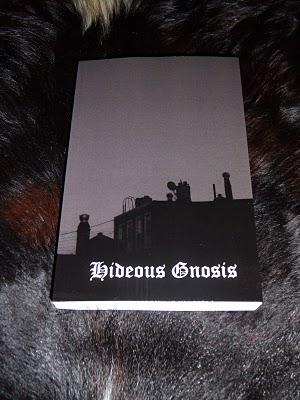
Image: Hideous Gnosis book
I’m being a little droll here because I myself am one of the contributors to the Hideous Gnosis book. Whether one comes to it from philosophy, cultural studies, political theory, or some other field, cultural commentary always places one in a tenuous position. As a scholar and academic one treats the material one is commenting on with a certain degree of seriousness and rigour; but as a fan (or consumer…) one is also aware that, at the end of the day, it’s all a big joke. So I begin this review with the following: ‘black metal theory’ not only challenges what is or isn’t black metal, but it also challenges what cultural commentary is, and the claims it makes.
The symposium and Hideous Gnosis book is the brainchild of Nicola Masciandaro, who teaches at Brooklyn College and is trained in medieval literary studies. Hideous Gnosis is a strange kind of book – it’s not exactly an academic anthology, in that the texts range from poetic evocations of black voids, to black metal manifestos, to band interviews, to historical essays and scholastic commentary. It’s also not quite music journalism, in that many of the texts are quite demanding, freely dropping quotes from Carl Schmitt, Arthur Schopenhauer or Michel Foucault instead of album reviews or the requisite history of the genre.
In music writing of this type, one typically finds a focus on one of four things: musical form, lyrical content, subculture and aesthetics, or politics and ideology. Each contribution to the volume touches on all of these to varying degrees, but what really distinguishes the writing in Hideous Gnosis is that each contribution revolves around a fundamental contradiction: how to talk about a music that refuses to be talked about? Or better: how to think about a music that negates all thought (in so far as ‘thought’ denotes order, system, and the production of knowledge – by human beings, for human beings)? As Masciandaro has noted in an interview, ‘there’s lots of resentment toward a sensible discourse around black metal… . Its center of gravity is an essential negativity…’ii
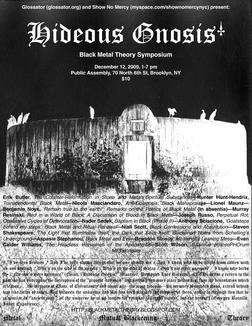
Image: Poster for Hideous Gnosis - Black Metal Theory Symposium
This central antagonism runs through nearly all the writing in Hideous Gnosis. That no one can agree on what is or is not black metal is not surprising – every music genre is defined by such debates. What’s more interesting is that in Hideous Gnosis, each attempt to think about black metal also puts itself forth as an antagonism, as a negation – an anti-natural nature, an anti-political politics, and an anti-philosophical philosophy.
Some of the authors think about black metal in terms of nature – but a concept of nature quite different from the romantic-hippie view of a nature beneficial for us (much less a nature we are ordained to save), as well as from the blood-and-soil view of nationalism. A casual look at black metal album covers and song lyrics reveals an ambivalent approach to nature, at once predatory and decaying, undergoing a constant metamorphosis that produces nothing. This is reflected in much of the writing: Steven Shakespeare’s more poetic text evokes pantheism, Schelling, and the idea of ‘absolute sound’; Aspasia Stephanou traces the motif of the wolf, lycanthropy and the forest in black metal; and Anthony Sciscione comments on its themes of cold and fire.
Other authors think of black metal in terms of politics – but a politics that attempts to avoid the poles of right and left, nationalism or ecology. Scott Wilson discusses the concept of sovereignty in the history of political thought, contrasting the archetype of the warrior to the soldier in black metal; Joseph Russo points out the central role that the body plays in black metal, albeit an ambivalent body of decay and rot; and in a sort of tête-à-tête the essays by Benjamin Noys and Evan Calder Williams approach black metal from different viewpoints – Noys questions both the left-wing and right-wing tendencies of black metal (both retaining a fidelity to Carl Schmitt’s maxim ‘remain true to the earth’), while Williams sees black metal as raising the stakes on what politics can mean, imagining a body politic without a head, a ‘war by the human in the name of the inhuman.’iii Whereas for Williams, black metal’s antagonism is really about the ‘war of totality against itself’, for Noys the best black metal can manage is the kind of self-reflexive ‘meta-fascism’ one can also find in punk and industrial music.
In addition to nature and politics, still others in the Hideous Gnosis volume think of black metal in terms of philosophy – or mysticism – because in black metal they increasingly become one and the same. Erik Butler examines black metal in relation to early modern monastic traditions; Hunter Hunt-Hendrix provides a manifesto for ‘transcendental black metal’; Masciandaro utilises the medieval catena or ‘chain’ form of writing to comment on the relation between black metal and cosmos (order); Niall Scott provides some ruminations on black metal as a form of religious confession; and my own contribution borrows the Scholastic quaestione to trace the role of demons and demonology vis-à-vis black metal.
Whether Hideous Gnosis definitively answers questions about nature, politics, or religion is beside the point. Nearly all the contributors agree that there is something here worth thinking about, though what that is differs a great deal from one text to another. Strangely, while I imagine the Hideous Gnosis contributors are also fans of the music, almost no one defends black metal, at least not to the hilt. And, in a way, black metal is indefensible – which makes it both appealing and frustrating for the philosopher.
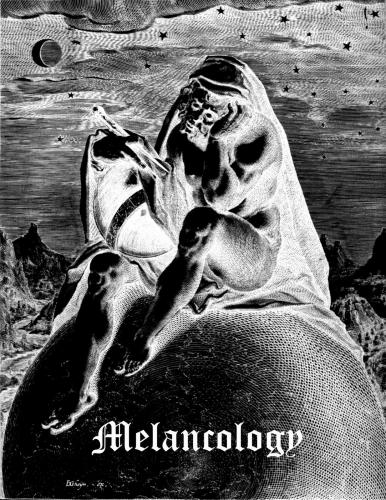
Image: Poster for Melancology - Black Metal symposium part II
Music and language exist in an antagonistic relation to one another. The most verbose and baroque of writers often trip up when writing about music and its effects – for instance, while music was central to Schopenhauer’s philosophy, in The World as Will and Representation he only manages to scribble down a few paragraphs, and even those are riddled with vague comments about music as some kind of inhuman, cosmic ‘Will’. At the same time, music bears a close relationship to poetry, with its emphasis on meter, cadence and rhyme. Many a classical composer has set pieces to poems – indeed western classical music, from the liturgical texts of Christian masses to modern opera, is so closely tied to language that it is nearly impossible to separate them. This back-and-forth is perhaps best symbolised by John Cage’s anthology of writings, scores and performance texts enigmatically entitled Silence.
If there is an antagonism between music and language, things get even more messy when we consider language about music. There’s something superfluous about music criticism, let alone something so grotesque as a philosophy of music. As with any specialised field, everyone has their opinion, debates ebb and flow, and the alibi of subjective aesthetic experience serves to keep the discussion or debate alive.
All of this is fine. But it is when we come up against a music that is so saturated with antagonism – both internally and in its relation to the world – that we see how these antagonisms endemic to music become apparent. I would argue that black metal is an example of such a music. There is a certain impasse in black metal, an abyss at its core that is, in a way, what black metal is. My own take – and many may disagree with this – is that the abyss at the core of black metal shares many affinities with negative theology, and what scholars often refer to as ‘darkness mysticism’.iv I would even argue that to understand black metal beyond a music genre, a marketing category, or a subcultural style, and to understand it aesthetically and politically, one has to read Dionysius the Areopagite or John of the Cross. This is the musical equivalent of negative theology – without god. One of my favorite quotes from Hideous Gnosis comes from Erik Butler, who reminds us of why metal is heavy:
The heaviest metal found on Earth is uranium: enriched uranium is plutonium, a substance that conjures up the Lord of the Dead. Heavier elements occur only in space, where Pluto mournfully orbits the Sun at a distance of 3,666 million miles. Somewhere still farther off in the void floats the philosopher’s stone, black metal.v
We live in a time of levitation; everything from the information we process to the bodies we wear is portrayed as weightless, mutable, and subject to infinite, personalised variation. At the same time, we are constantly reminded of just how leaden and earth-bound we are, from the thick, viscous oil that seeps onto the shores of the Gulf of Mexico, to the sheer biomass of waste produced by the world’s major cities. Perhaps this is why metal is heavy – not because it is about nature, politics, or religion, but because it gets at a central ambivalence surrounding material culture.
I’m also reminded of Blake’s famous line about the ‘dark Satanic Mills’ of industrial London – perhaps mills similar to the steel factories outside the schoolhouse in Aston, where a young Tony Iommi listened to their incessant, inhuman churning.
Eugene Thacker is a New York based writer and the author of Horror of Philosophy (forthcoming from Zero Books). He teaches at The New School and is a scholar-in-residence at the Miskatonic University Colloquy for Inexistent Cryptobiology
INFO
Nicola Masciandaro (ed.), Hideous Gnosis: Black Metal Theory Symposium, New York: Createspace, 2010.
FOOTNOTES
i The article is online at: http://www.nytimes.com/2009/12/15/arts/music/15metal.html?_r=1.
ii Ibid.
iii Hideous Gnosis, p. 136.
iv On darkness mysticism see Denys Turner, The Darkness of God, Cambridge: Cambridge University Press, 1998.
v Ibid., p. 30.
Saturday, June 26, 2010
Black Metal Theory Symposium II: Melancology

MELANCOLOGY
Black Metal Theory Symposium II
13 January 2011
The Fighting Cocks
Old London Road
Kingston-upon-Thames, London
1-11pm
Another gathering dedicated to the mutual blackening of metal and theory
Live Act
ABGOTT
Plenary Speaker
REZA NEGARESTANI
‘Earthly thought embraces perishability (i.e. cosmic contingency) as its immanent core .... such perishability ... grasps the openness of Earth towards the cosmic exteriority not in terms of concomitantly vitalistic / necrocratic correlations (as the Earth’s relationship with the Sun) but alternative ways of dying and loosening into the cosmic abyss ... The only true terrestrial ecology is the one founded on the unilateral nature of cosmic contingency against which there is no chance of resistance – there are only opportunities for drawing schemes of complicity.’ ...
‘Hence, the Cartesian dilemma, “What course in life shall I follow?” should be bastardized as “Which way out shall I take?”’
Reza Negarestani, ‘Solar Inferno and the Earthbound Abyss’
MELANCOLOGY
Black metal irrupts from a place already divested of nature, a site of extinction, ‘a place empty of life / Only dead trees ...’ (Mayhem, ‘Funeral Fog’, 1992); ‘Our skies are forever black / Here is no signs of life at all’ (Deathspell Omega, ‘From Unknown Lands of Desolation’, 2005). As such black metal could be described as a negative form of environmental writing; the least Apollonian of genres, it is terrestrial – indeed subterranean and infernal – inhabiting a dead forest that is at once both mythic and real unfolding along an atheological horizon that marks the limit of absolute evil where there are no goods or resources to distribute and therefore no means of power and domination, a mastery of nothing.
A new word is required that conjoins ‘black’ and ‘ecology’: melancology, a word in which can be heard the melancholy affect appropriate to the conjunction. A new word implies a new concept and we know from Deleuze and Guattari that concepts have to fulfil three criteria. Accordingly, the plane of immanence of melancology is extinction and non-being. All things are destined for extinction; immanent to all being is the irreducible fact of its total negation without reserve or remainder. The development of the characteristics of melancology is to be addressed at the Symposium, of course, but there are already a number of apophasic determinations: it is not ecology, it is anorganic; it is not political economy, it is anti-instrumental; it is not love of nature, environmentalism, Gaia, geophilosophy ... But it implies an ethos and a style that delineates the third aspect of the concept, its embodiment in a conceptual personae: the black metal kvltist whose ethos runs across the spectrum of melancholy from bile and rage to sorrow, depression and the delectation of evil all the better to affirm the desolation s/he contemplates in the sonorous audibility of black metal’s sovereign dissonance. This environment of absolute evil is exactly the same as the absolute good of black metal itself: the expenditure of a sonic drive that propels a blackened self-consciousness, a melancological consciousness without object that is the necessary prior condition to any speculation on or intervention in the environment.
The Black Metal Theory Symposium thus invites speculation and interventions on the blackening of the earth, landscapes of extinction, starless aeon, sempiternal nightmares, black horizons, malign essences, Qliphothic forces from beyond ... in a general re-conceptualization of black ecology.
Inquiries & abstracts to Niall Scott & Scott Wilson
NWRScott@uclan.ac.uk
S.Wilson@kingston.ac.uk
Tuesday, May 18, 2010
Hideous Gnosis Reviewed in Wire Magazine by Mark Fisher

Nicola Masciandaro (Editor)
CreateSpace Pbk 292pp
“What sucks is when metal is co-opted by wannabe academic nerds,” grumbled the Black Metal blog Chronic Youth in anticipation of the Brooklyn symposium on which this book is based. Scott Wilson’s “Pop Journalism And The Passion For Ignorance” uses the Chronic Youth complaint as its epigraph, treating it as part a “hostility to academic commentary on popular culture that unites conservatives with pop journalists and bloggers everywhere”. If there’s one attitude likely to be shared by certain Black Metal fanatics and the middlebrow compilers of Private Eye’s Pseuds’ Corner, it is this hostility to the ‘intellectualising’ of popular culture. Chronic Youth was by no means the only dissenting voice about the symposium: comments from the Black Metal Theory blog, included as an appendix here, and some remarks quoted in editor Nicola Masciandaro’s essay “Anti-Cosmosis”, attest to a deep suspicion about the project.
Yet Black Metal as a genre is saturated in metaphysics. If some BM performers resist commentary, they are nevertheless unlikely to trot out the boring musician cliché that ‘they just play’. The reticence comes from a reverence, a sense that what the music evokes is unspeakable. BM is a music of intense vision and commitment, a music that – whether it likes it or not – is deeply theoretical. As Evan Calder Williams argues, Black Metal “is smarter than it thinks”. It isn’t exactly a stretch to connect Xasthur, Burzum or Wolves in the Throne Room with the dark, inhuman philosophies of Bataille, Kierkegaard, Schopenhauer, Schelling and younger theorists like the gnomic metaphysician of decay, Reza Negarestani.
The danger with these sorts of projects is that they assume a kind of anthropological distance from their object, performing their analyses with a studied air of neutrality and a neurotic concern that footnotes are properly referenced. There is no trace of that in Hideous Gnosis: whether they are disinterring the different meanings of the ‘Black’ of Black Metal, as in Eugene Thacker’s “Three Questions on Demonology”, or tracing the mythic roots of some BM tropes in myth and folklore as in Aspasia Stephanou’s “Playing Wolves And Red Riding Hoods In Black Metal”, the essays are all exercises in passionate engagement, intellectual without being dryly academic.
It is quickly clear that BM’s real enemy is not religion as such – which, after all, is ripe for infestation and inversion – but the desacralised arcades of postmodern populism, with their ontological and cultural pluralism and their smirking personability. Joseph Russo’s essay “Perpetue Putesco – Perpetually I Putrefy” notes with disgust that religion itself has succumbed to this quotidian cheeriness: many “masses often take place in fluorescent-lit recreation centres” and “priests often wear swimsuits”. Much of Black Metal’s appeal consists in the way it constructs a (sepulchral, subterranean) alternative to these overlit zones. One of the most interesting and difficult problems, however, is BM’s tendency – by no means ubiquitous, but widespread enough – to characterise its alternative in terms of extreme right-wing politics. Benjamin Noys’s “’Remain True to the Earth!’: Remarks on the Politics of Black Metal” and Evan Calder Williams’s “The Headless Horsemen of the Apocalypse” are about the political implications of BM given that, in Williams’s words, it is not possible to “separate the musical wheat from the crypto-fascist chaff”. For Williams, BM becomes a symptom of the very world that it abominates but fails properly to negate: “If the antistatic condition on which Black Metal is staked is ... that of militancy, its impossible solution is collective militancy.” One of the many provocative claims in a book that is an exhilarating example of how to write about music as if it matters .
Mark Fisher
68 / The Wire / Print Run
Saturday, February 27, 2010
Hideous Gnosis Reviewed @ Aquarius Records
From Aquarius Records:
This one almost doesn't require a review, pretty much every truely obsessive black metal fan is gonna want this, whether they actually read it or not. And having only dabbled, it's hard to say how many folks, metalheads in particular, are actually gonna want to delve into this, a collection (often in expanded and revised form) of essays and documents that were presented late last year at "Hideous Gnosis", a symposium on black metal theory (yes, a symposium on black metal theory), which took place in Brooklyn in December of 2009. That said, we also can't imagine a metalhead who wouldn't feel like they had to have copy of this on their bookshelf, if they have any intellectual pretensions whatsoever (which this sure does), or sense of humor (which perhaps this does as well).
The real question regarding Hideous Gnosis is whether black metal does indeed have some sort of lofty academic underpinnings, or is this academic study of the genre simply another example of hipsters trying to legitimize something that appears to be, at its core, raw and underground and visceral and personal and pretty much diametrically opposed to any idea of scholarly study or academic examination? Which thankfully is discussed quite a bit in this book, in the form of several essays, but via the inclusion of comments from the symposium's website, both positive and negative, plenty of them mean, some of them funny, and a few measured and thought out. But it's good to know that the very fact that there exists an academic black metal symposium is in itself worthy of debate, keeps Hideous Gnosis somewhat grounded.
There are definitely some interesting essays here, one in particular that focuses on black metal's reliance on climate, as in grim and frosty and cold, etc. The most interesting to us, are also the ones that are easiest to read, the ones NOT mired down in academic grad school doublespeak, there are plenty of examples of essays that seem interesting, but require digging though a malfunctioning thesaurus to get to the root of what's really being said. There is an excerpt of Brandon Stosuy's in progress oral history of American black metal (featuring our very own Andee) which was also printed in a different form in a past issue of The Believer, which is definitely cool, there's Hunter Hunt Hendrix of Liturgy's confusional analysis and dissection of "Transcendental Black Metal", and so it goes, the collection slipping back and forth, striking a pretty good balance, between people who love black metal who just want to dig deeper, and explore a music they love and discuss it with other like minded metalheads, and the flipside, dry, academic treatises on various elements and aspects of black metal, a bit too removed from the actual sound, and the fucked up ferocious intensity that is what makes the music truly appealing for us. But again, that doesn't mean those pieces aren't a blast to read, some might win you over, others actually do offer up some keen insights, and some seem to exist simply as fodder for merciless mockery. But really, in some weird way that does essentially reflect the genre as a whole, there are dabblers, there are folks who take it WAY too seriously, people who love it and live it, others who are merely fascinated or curious or even repulsed. It ultimately doesn't matter, like the spate of recent black metal docs, online blogs, if you're into black metal, for whatever reason, you're probably gonna want to read this, even if it pisses you off. ESPECIALLY if it pisses you off. An essential, and maybe controversial [addition] to your metal music library.
This one almost doesn't require a review, pretty much every truely obsessive black metal fan is gonna want this, whether they actually read it or not. And having only dabbled, it's hard to say how many folks, metalheads in particular, are actually gonna want to delve into this, a collection (often in expanded and revised form) of essays and documents that were presented late last year at "Hideous Gnosis", a symposium on black metal theory (yes, a symposium on black metal theory), which took place in Brooklyn in December of 2009. That said, we also can't imagine a metalhead who wouldn't feel like they had to have copy of this on their bookshelf, if they have any intellectual pretensions whatsoever (which this sure does), or sense of humor (which perhaps this does as well).
The real question regarding Hideous Gnosis is whether black metal does indeed have some sort of lofty academic underpinnings, or is this academic study of the genre simply another example of hipsters trying to legitimize something that appears to be, at its core, raw and underground and visceral and personal and pretty much diametrically opposed to any idea of scholarly study or academic examination? Which thankfully is discussed quite a bit in this book, in the form of several essays, but via the inclusion of comments from the symposium's website, both positive and negative, plenty of them mean, some of them funny, and a few measured and thought out. But it's good to know that the very fact that there exists an academic black metal symposium is in itself worthy of debate, keeps Hideous Gnosis somewhat grounded.
There are definitely some interesting essays here, one in particular that focuses on black metal's reliance on climate, as in grim and frosty and cold, etc. The most interesting to us, are also the ones that are easiest to read, the ones NOT mired down in academic grad school doublespeak, there are plenty of examples of essays that seem interesting, but require digging though a malfunctioning thesaurus to get to the root of what's really being said. There is an excerpt of Brandon Stosuy's in progress oral history of American black metal (featuring our very own Andee) which was also printed in a different form in a past issue of The Believer, which is definitely cool, there's Hunter Hunt Hendrix of Liturgy's confusional analysis and dissection of "Transcendental Black Metal", and so it goes, the collection slipping back and forth, striking a pretty good balance, between people who love black metal who just want to dig deeper, and explore a music they love and discuss it with other like minded metalheads, and the flipside, dry, academic treatises on various elements and aspects of black metal, a bit too removed from the actual sound, and the fucked up ferocious intensity that is what makes the music truly appealing for us. But again, that doesn't mean those pieces aren't a blast to read, some might win you over, others actually do offer up some keen insights, and some seem to exist simply as fodder for merciless mockery. But really, in some weird way that does essentially reflect the genre as a whole, there are dabblers, there are folks who take it WAY too seriously, people who love it and live it, others who are merely fascinated or curious or even repulsed. It ultimately doesn't matter, like the spate of recent black metal docs, online blogs, if you're into black metal, for whatever reason, you're probably gonna want to read this, even if it pisses you off. ESPECIALLY if it pisses you off. An essential, and maybe controversial [addition] to your metal music library.
Wednesday, February 10, 2010
Hideous Gnosis is Here

Hideous Gnosis: Black Metal Theory Symposium 1. Edited by Nicola Masciandaro. 292 pages. $20.00. ISBN 1450572162. EAN-13 9781450572163.
Essays and documents related to Hideous Gnosis, a symposium on black metal theory, which took place on December 12, 2009 in Brooklyn, NY. Expanded and Revised.
"Life is a hideous thing, and from the background behind what we know of it peer daemoniacal hints of truth which make it sometimes a thousandfold more hideous" (Lovecraft)
“Poison yourself . . . with thought” (Arizmenda)
CONTENTS
Steven Shakespeare, “The Light that Illuminates Itself, the Dark that Soils Itself: Blackened Notes from Schelling’s Underground.”
Erik Butler, “The Counter-Reformation in Stone and Metal: Spiritual Substances.”
Scott Wilson, “BAsileus philosoPHOrum METaloricum.”
Hunter Hunt-Hendrix, “Transcendental Black Metal.”
Nicola Masciandaro, “Anti-Cosmosis: Black Mahapralaya.”
Joseph Russo, “Perpetue Putesco – Perpetually I Putrefy.”
Benjamin Noys, “‘Remain True to the Earth!’: Remarks on the Politics of Black Metal.”
Evan Calder Williams, “The Headless Horsemen of the Apocalypse.”
Brandon Stosuy, “Meaningful Leaning Mess.”
Aspasia Stephanou, “Playing Wolves and Red Riding Hoods in Black Metal.”
Anthony Sciscione, “‘Goatsteps Behind My Steps . . .’: Black Metal and Ritual Renewal.”
Eugene Thacker, “Three Questions on Demonology.”
Niall Scott, “Black Confessions and Absu-lution.”
DOCUMENTS: Lionel Maunz, Pineal Eye; Oyku Tekten, Symposium Photographs; Scott Wilson, “Pop Journalism and the Passion for Ignorance”; Karlynn Holland, Sin Eater I-V; Nicola Masciandaro and Reza Negarestani, Black Metal Commentary; Black Metal Theory Blog Comments; Letter from Andrew White; E.S.S.E, Murder Devour I.
Friday, February 5, 2010
Publication Imminent
Coming soon . . .

Hideous Gnosis: Black Metal Theory Symposium 1. Edited by Nicola Masciandaro. 292 pages. $20.00. ISBN 1450572162. EAN-13 9781450572163.
Essays and documents related to Hideous Gnosis, a symposium on black metal theory, which took place on December 12, 2009 in Brooklyn, NY. Expanded and Revised.
“Poison yourself . . . with thought” – Arizmenda
CONTENTS
Steven Shakespeare, “The Light that Illuminates Itself, the Dark that Soils Itself: Blackened Notes from Schelling’s Underground.”
Erik Butler, “The Counter-Reformation in Stone and Metal: Spiritual Substances.”
Scott Wilson, “BAsileus philosoPHOrum METaloricum.”
Hunter Hunt-Hendrix, “Transcendental Black Metal.”
Nicola Masciandaro, “Anti-Cosmosis: Black Mahapralaya.”
Joseph Russo, “Perpetue Putesco – Perpetually I Putrefy.”
Benjamin Noys, “‘Remain True to the Earth!’: Remarks on the Politics of Black Metal.”
Evan Calder Williams, “The Headless Horsemen of the Apocalypse.”
Brandon Stosuy, “Meaningful Leaning Mess.”
Aspasia Stephanou, “Playing Wolves and Red Riding Hoods in Black Metal.”
Anthony Sciscione, “‘Goatsteps Behind My Steps . . .’: Black Metal and Ritual Renewal.”
Eugene Thacker, “Three Questions on Demonology.”
Niall Scott, “Black Confessions and Absu-lution.”
DOCUMENTS: Lionel Maunz, Pineal Eye; Oyku Tekten, Symposium Photographs; Scott Wilson, “Pop Journalism and the Passion for Ignorance”; Karlynn Holland, Sin Eater I-V; Nicola Masciandaro and Reza Negarestani, Black Metal Commentary; Black Metal Theory Blog Comments; Letter from Andrew White; E.S.S.E, Murder Devour I.

Hideous Gnosis: Black Metal Theory Symposium 1. Edited by Nicola Masciandaro. 292 pages. $20.00. ISBN 1450572162. EAN-13 9781450572163.
Essays and documents related to Hideous Gnosis, a symposium on black metal theory, which took place on December 12, 2009 in Brooklyn, NY. Expanded and Revised.
“Poison yourself . . . with thought” – Arizmenda
CONTENTS
Steven Shakespeare, “The Light that Illuminates Itself, the Dark that Soils Itself: Blackened Notes from Schelling’s Underground.”
Erik Butler, “The Counter-Reformation in Stone and Metal: Spiritual Substances.”
Scott Wilson, “BAsileus philosoPHOrum METaloricum.”
Hunter Hunt-Hendrix, “Transcendental Black Metal.”
Nicola Masciandaro, “Anti-Cosmosis: Black Mahapralaya.”
Joseph Russo, “Perpetue Putesco – Perpetually I Putrefy.”
Benjamin Noys, “‘Remain True to the Earth!’: Remarks on the Politics of Black Metal.”
Evan Calder Williams, “The Headless Horsemen of the Apocalypse.”
Brandon Stosuy, “Meaningful Leaning Mess.”
Aspasia Stephanou, “Playing Wolves and Red Riding Hoods in Black Metal.”
Anthony Sciscione, “‘Goatsteps Behind My Steps . . .’: Black Metal and Ritual Renewal.”
Eugene Thacker, “Three Questions on Demonology.”
Niall Scott, “Black Confessions and Absu-lution.”
DOCUMENTS: Lionel Maunz, Pineal Eye; Oyku Tekten, Symposium Photographs; Scott Wilson, “Pop Journalism and the Passion for Ignorance”; Karlynn Holland, Sin Eater I-V; Nicola Masciandaro and Reza Negarestani, Black Metal Commentary; Black Metal Theory Blog Comments; Letter from Andrew White; E.S.S.E, Murder Devour I.
Friday, December 18, 2009
Black Metal Theory Symposium I (2009) - audio

Sound recordings of select presentations distributable as one file. Download here.
Or individually:
Anthony Sciscione - ‘Goatsteps behind my steps’: Black Metal and Ritual Renewal (mp3)Brandon Stosuy - Meaningful Leaning Mess (mp3)
Erik Butler - The Counter-Reformation in Stone and Metal: Spiritual Substances (mp3)
Hunter Hunt-Hendrix - Transcendental Black Metal (mp3)
Joseph Russo - Perpetue Putesco - Perpetually I Putrefy (mp3)
Niall Scott - Black Confessions and Absu-lution (mp3)
Nicola Masciandaro - Anti-Cosmosis: Black Mahapralaya (mp3)
Scott Wilson - BAsileus philosoPHOrum METaloricum (mp3)
Steven Shakespeare - The Light that Illuminates Itself, the Dark that Soils itself: Blackened Notes from Schelling's Underground (mp3)
Wednesday, October 21, 2009
Hideous Gnosis: Schedule and Flyers

HIDEOUS GNOSIS
Black Metal Theory Symposium
December 12, 2009
The Public Assembly
70 North 6th St
Brooklyn, NY
1:00-7:00 p.m.
$10 cover
A gathering dedicated to the mutual blackening of metal and theory.
The Light that Illuminates Itself, the Dark that Soils itself: Blackened Notes from Schelling’s Underground
Steven Shakespeare
The Counter-Reformation in Stone and Metal: Spiritual Substances
Erik Butler
BAsileus philosoPHOrum METaloricum
Scott Wilson
(moderator: Niall Scott)
II: 2:20-3:30
Transcendental Black Metal
Hunter Hunt-Hendrix
Anti-Cosmosis: Black Mahapralaya
Nicola Masciandaro
Perpetual Rot: Obsessive Cycles of Deterioration
Joseph Russo
(moderator: Steven Shakespeare)
Interlude: 3:30-4:30
Nader Sadek, Baptism in Black (Phase II)
Sym-posium (together-drinking)
III: 4:30-5:45
‘Remain true to the earth!’: Remarks on the Politics of Black Metal
Benjamin Noys (in absentia)
The Headless Horsemen of the Apocalypse
Evan Calder Williams
Black Confessions and Absu-lution
Niall Scott
Meaningful Leaning Mess
Brandon Stosuy
(moderator: Scott Wilson)
IV: 5:50-7:00
Black Metal and Evil
Aspasia Stephanou
Red in a World of Black: A Discussion of Blood in Black Metal
Murray Resinski
‘Goatsteps behind my steps’: Black Metal and Ritual Renewal
Anthony Sciscione
(moderator: Erik Butler)
Sculpture by Lionel Maunz
Sponsored by Glossator and Show No Mercy
Organized by Nicola Masciandaro
 PDF
PDF
* * *
Why do you compel me to divulge things that would better remain unknown to you?--Silenus
What coherent representation could express or portray so gibbous and infamous a nebulosity as the specter of a malign, chaotic perversion, itself a morbid blasphemy against nature? Molded by the dead brain of a hybrid nightmare, would not such a vaporous terror constitute in all loathsome truth the exquisitely, the shriekingly unnamable?—H.P. Lovecraft, The Unnamable
He is not a return to the past; he has undergone the corruption of the “present-day man” and nothing has more place within him than the devastation which it leaves . . . the memory of Plato, of Christianity and above all—the most hideous—the memory of modern ideas, extend behind him like fields of ashes. But between the unknown and him has been silenced the chirping of ideas, and it is through this that he is similar to “ancient man”: of the universe he is no longer the rational (alleged) master, but the dream.—Georges Bataille, Inner Experience
But suddenly the Mirror went altogether dark, as dark as if a hole had opened in the world of sight, and Frodo looked into emptiness.—J.R.R. Tolkien, The Fellowship of the Ring
The black tablet of vision, I hold dear for the sake
That to the soul, it is a book of the picture of the dark mole of Thine. —Hafiz
 Painting by E.S.S.E. (Eternal Secret Society of Entities)
“I’ve seen demons / And I’ve been shown things that no-one should see / And I know why birds alight from cables with no-one beneath / Who’s on the side of the angels / Who’s on the side of Satan / God’s not there anymore / I know why birds fly / No-one’s there anymore” (Caïna, “Hideous Gnosis,” Mourner [Profound Lore Records, 2007]).
What coherent representation could express or portray so gibbous and infamous a nebulosity as the specter of a malign, chaotic perversion, itself a morbid blasphemy against nature? Molded by the dead brain of a hybrid nightmare, would not such a vaporous terror constitute in all loathsome truth the exquisitely, the shriekingly unnamable?—H.P. Lovecraft, The Unnamable
He is not a return to the past; he has undergone the corruption of the “present-day man” and nothing has more place within him than the devastation which it leaves . . . the memory of Plato, of Christianity and above all—the most hideous—the memory of modern ideas, extend behind him like fields of ashes. But between the unknown and him has been silenced the chirping of ideas, and it is through this that he is similar to “ancient man”: of the universe he is no longer the rational (alleged) master, but the dream.—Georges Bataille, Inner Experience
But suddenly the Mirror went altogether dark, as dark as if a hole had opened in the world of sight, and Frodo looked into emptiness.—J.R.R. Tolkien, The Fellowship of the Ring
The black tablet of vision, I hold dear for the sake
That to the soul, it is a book of the picture of the dark mole of Thine. —Hafiz
 Painting by E.S.S.E. (Eternal Secret Society of Entities)
“I’ve seen demons / And I’ve been shown things that no-one should see / And I know why birds alight from cables with no-one beneath / Who’s on the side of the angels / Who’s on the side of Satan / God’s not there anymore / I know why birds fly / No-one’s there anymore” (Caïna, “Hideous Gnosis,” Mourner [Profound Lore Records, 2007]).
Subscribe to:
Posts (Atom)